Form Guide · DF.003 · The Career Break File
How to plan a career break
Record the dates, spending limit and return reserve for a break from paid work. Start with five dates that show when paid work stops and when you expect it, and your pay, to resume.
This guide follows a UK career-break planner. Check the employment, tax and other arrangements that apply to you.
Watch the guide
When people start
- Your employer has agreed a sabbatical.
- A contract ends and the next one starts in three months.
- You plan to resign and take time out before looking for work.
- You want time to travel, study or care for someone, and need to know what you can afford.
Your first 15 minutes
Five dates
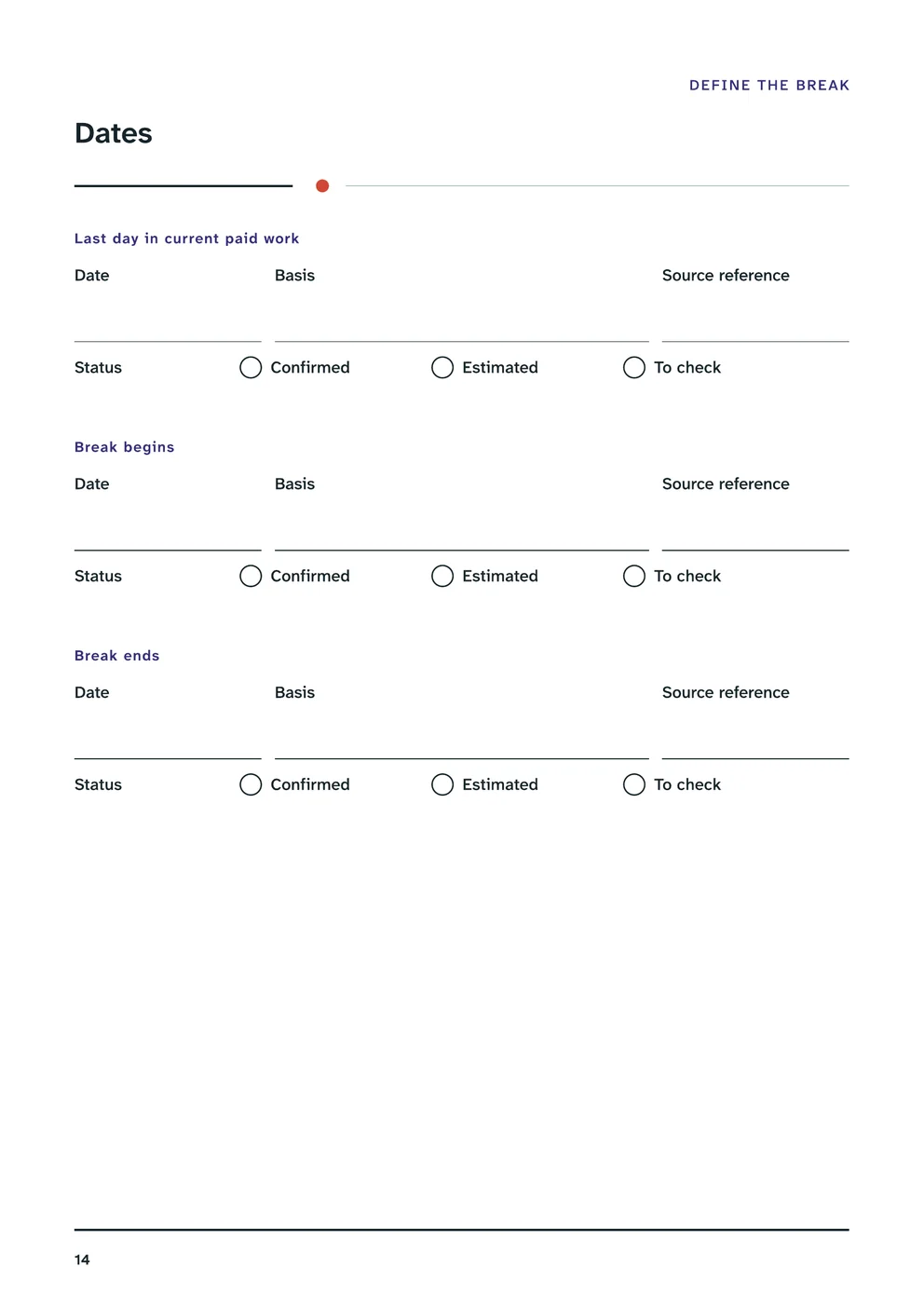
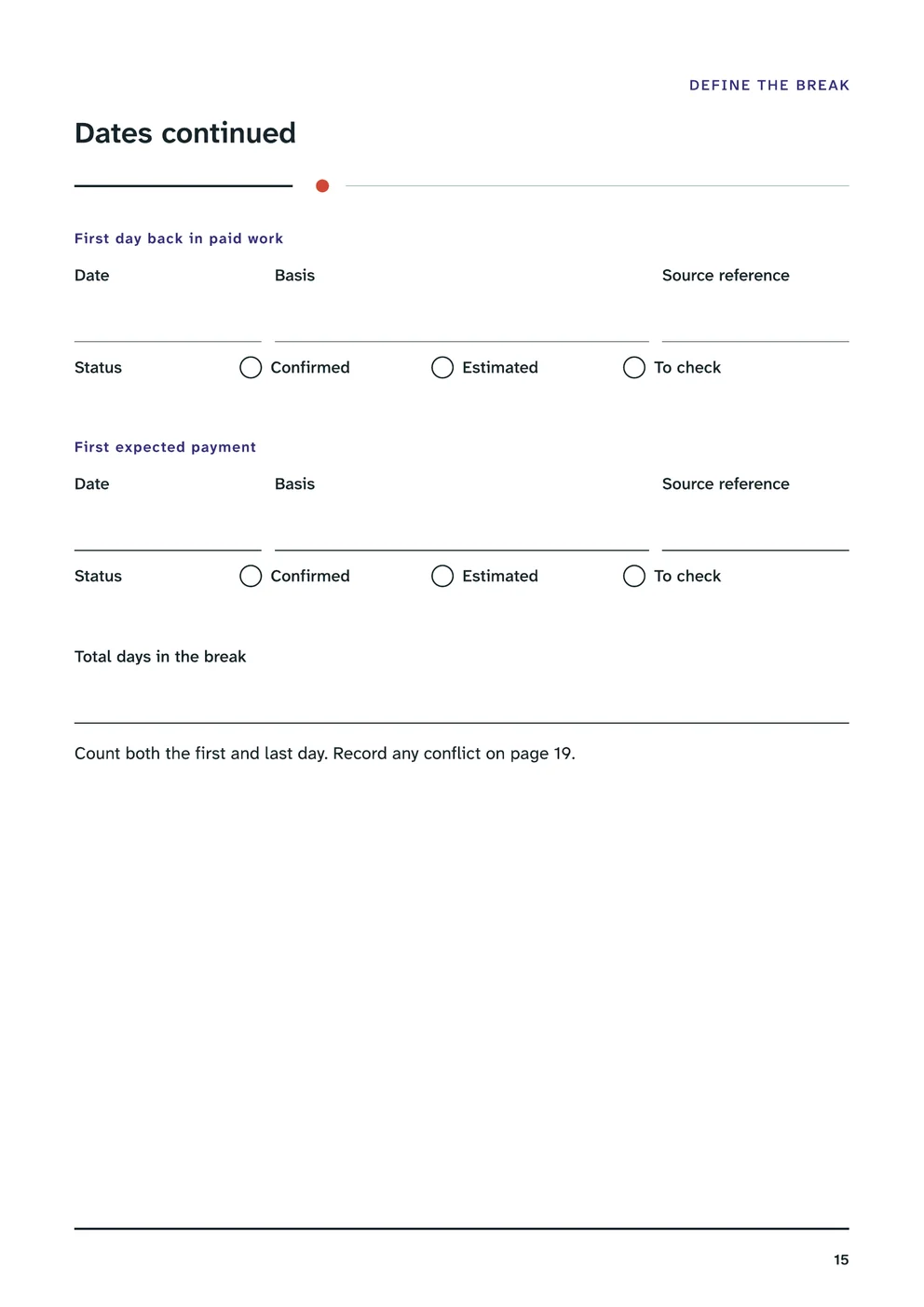
Use a sheet of paper or a note on your device. In The Career Break File, use Dates on pages 14 and 15. For each date, record what it is based on, the source and whether it is confirmed.
- Write your last day in current paid work.
- Write the day the break begins.
- Write the day the break ends.
- Write your first day back in paid work.
- Write the date of your first expected payment after the break.
- Mark each date Confirmed, Estimated or To check, then count the total days in the break, including the first and last day.
The period after the break ends and before your first expected payment may include time before you return to paid work as well as the wait for payday. Record the costs your return reserve must cover during that period. In the edition, use Time to cover before first income on page 56.
Common questions
- Can I sort the money out as I go?
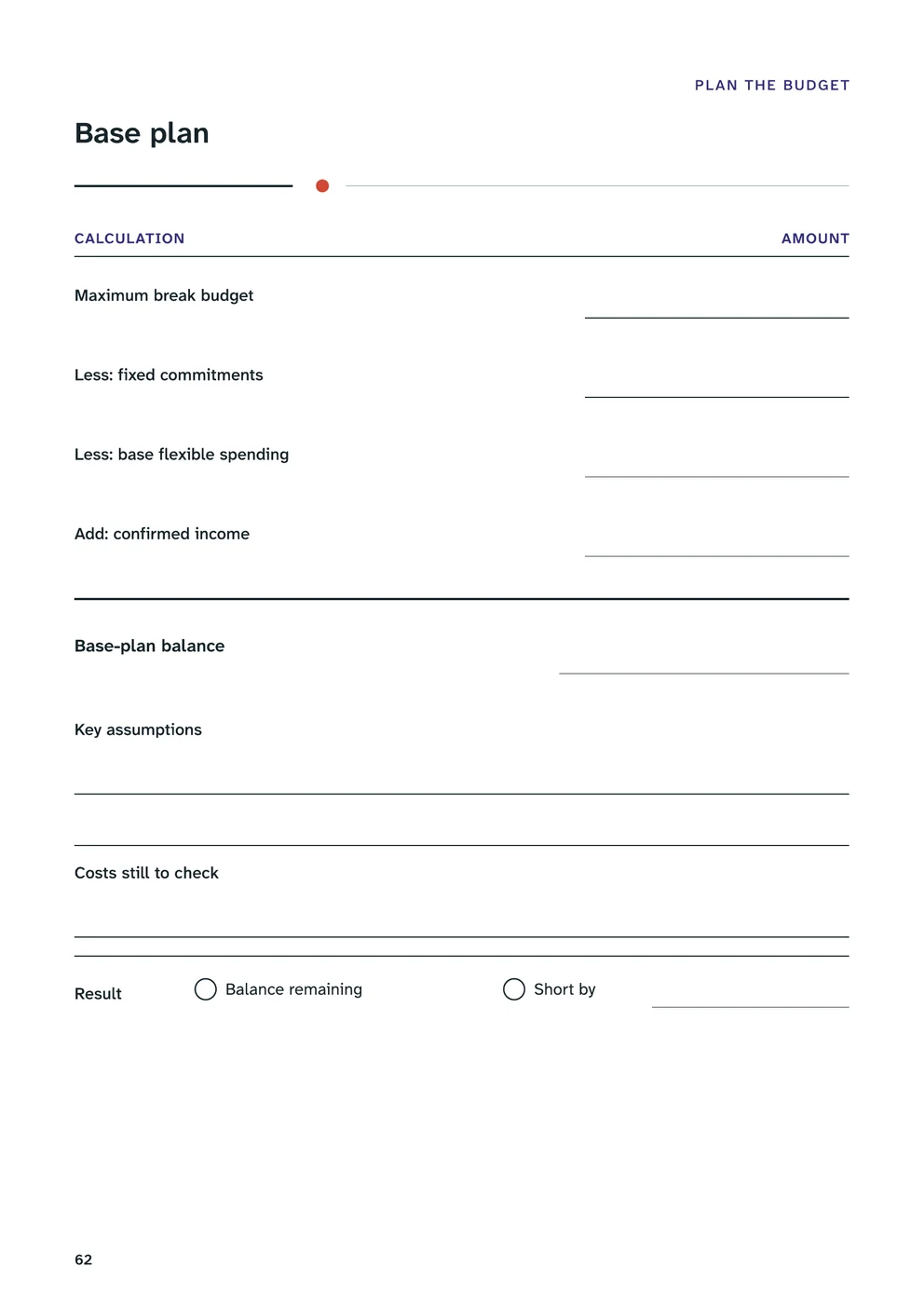
- Plan the money for coming back as well as for being away. In The Career Break File, the return reserve covers getting home, returning to work and the time before your first payment, and it stays out of the break budget. Your maximum break budget is the money available, less money set aside, preparation costs and the return reserve.
- My employer has agreed. Is it settled?
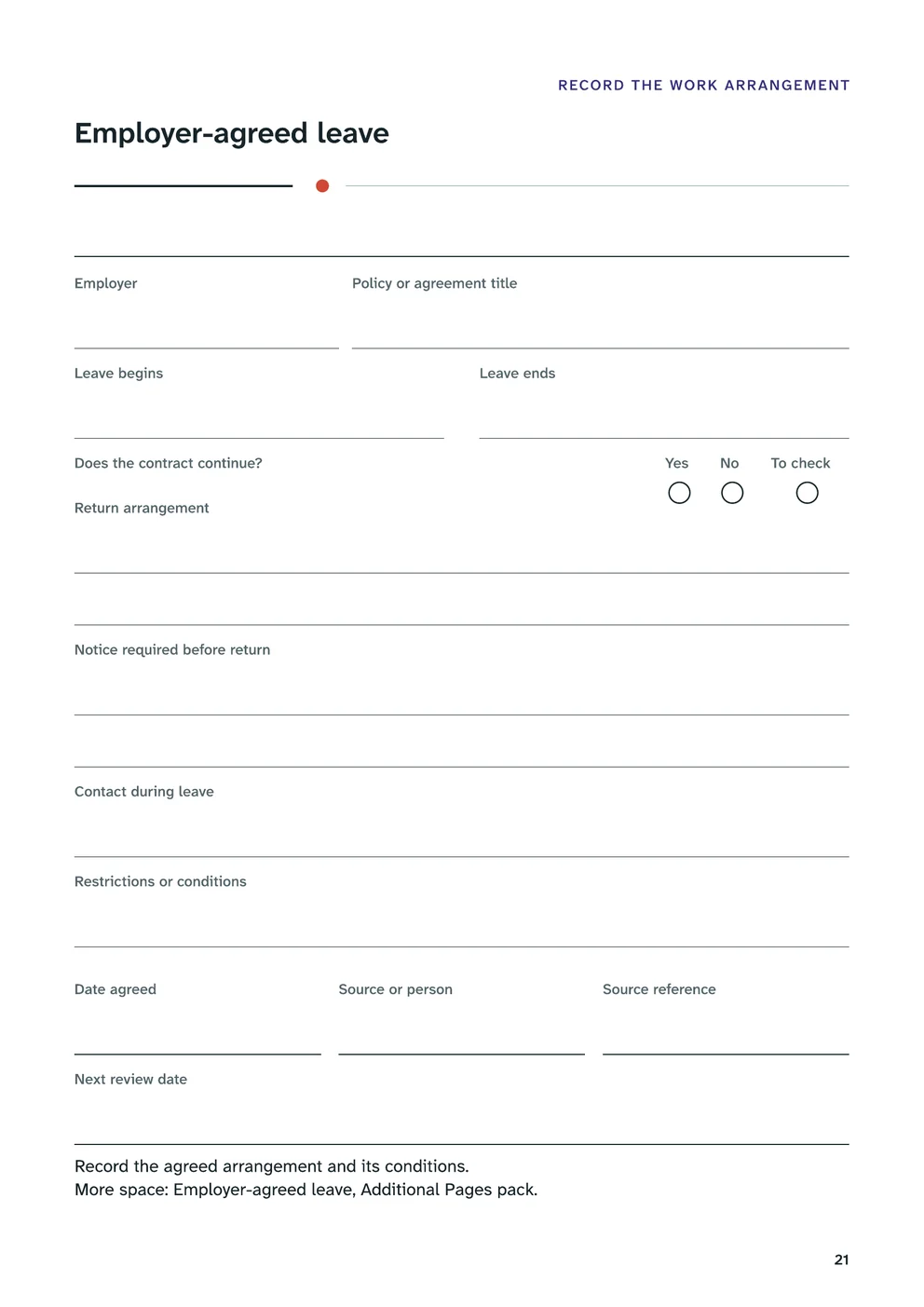
- GOV.UK warns that arrangements to return after a career break are not legally binding and that the break could end the existing employment contract. Record what your employer has agreed, whether your contract continues and what notice you must give before returning. The Employer-agreed leave page also records the date agreed and who agreed it.
- Isn’t there too much admin?
- Page 30 lists the areas that may apply, such as tax, National Insurance, student loan, and pay, pension and work benefits. Mark each one Relevant, Not relevant or To decide, and complete the matching page for each one marked Relevant. Where a page asks, add the source or person you checked with, the date checked and the next action.
What the full edition adds
The Career Break File
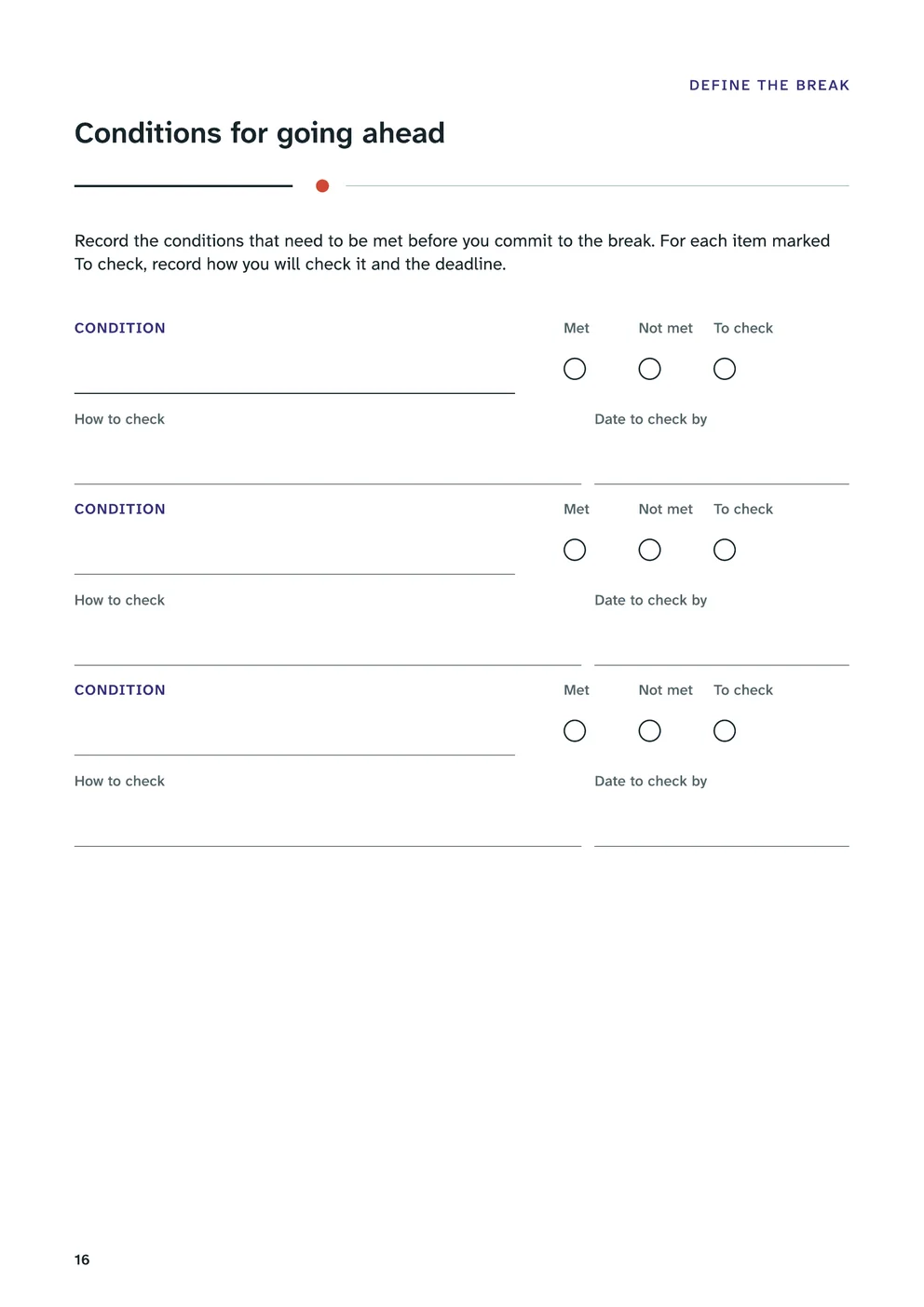
- Conditions for going ahead
- Pages 16 and 17 list the conditions to meet before you commit, each marked Met, Not met or To check.
- The work arrangement
- Pages for employer-agreed leave, leaving a job or a contract gap, self-employment, work handover, and pay and pension.
- Budget and return reserve
- Money available, fixed commitments, flexible spending, confirmed income, the return reserve and return runway, with a base plan and a higher-cost plan.
- Return, departure and review
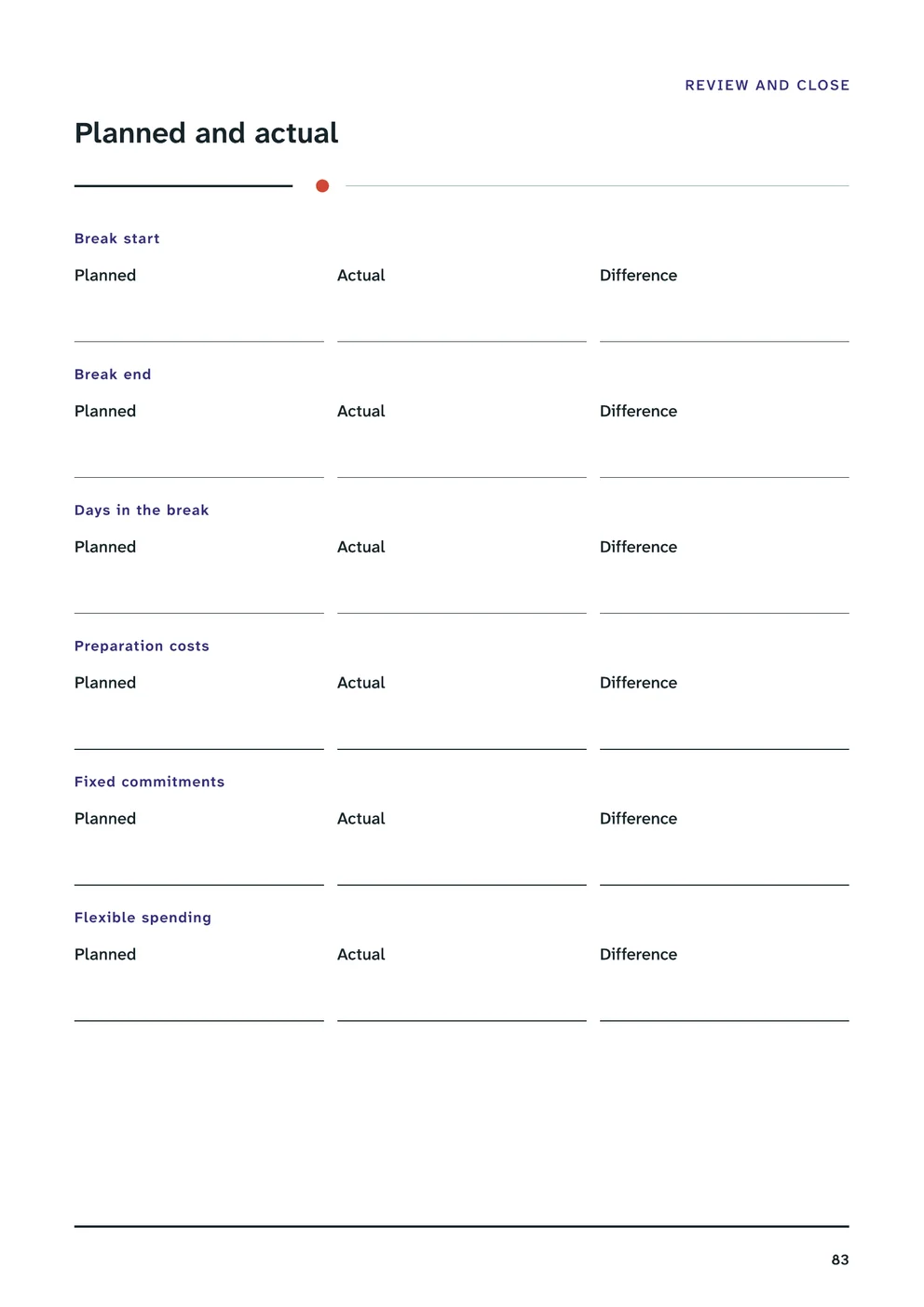
- Pages to plan the return and prepare to leave, three checkpoints while you are away, and a comparison of planned and actual dates and money after you return.
Free utility
Budget Tracker
Build a Budget Tracker workbook in Excel for the months of the break: set a budget for each month, record income and spending, and compare the actual amounts with the plan. Free to use. No account.
What to leave out
Leave passwords, full bank-card numbers, National Insurance numbers, passport numbers and detailed medical identifiers out of the file.
Sources
GOV.UK, Career breaks: https://www.gov.uk/career-breaks
Checked on 27 October 2026.