


Form Guide · DF.026 · The Lapidary Process Book
How to record a cabochon from rough to polish
Give each rough a reference and record the cut, shaping, abrasive and polish stages for each piece. Record the source description and locality, then track where the finished piece goes.
Watch the guide
When people start
- You have a bag of rough from a show, and the label is starting to fade.
- A preform has been sitting half-finished for months.
- Undercutting became visible during polishing, and you want a record of the earlier stages.
- Someone asks what a finished piece is and where the rough came from.
Your first bench session
One rough, one preform
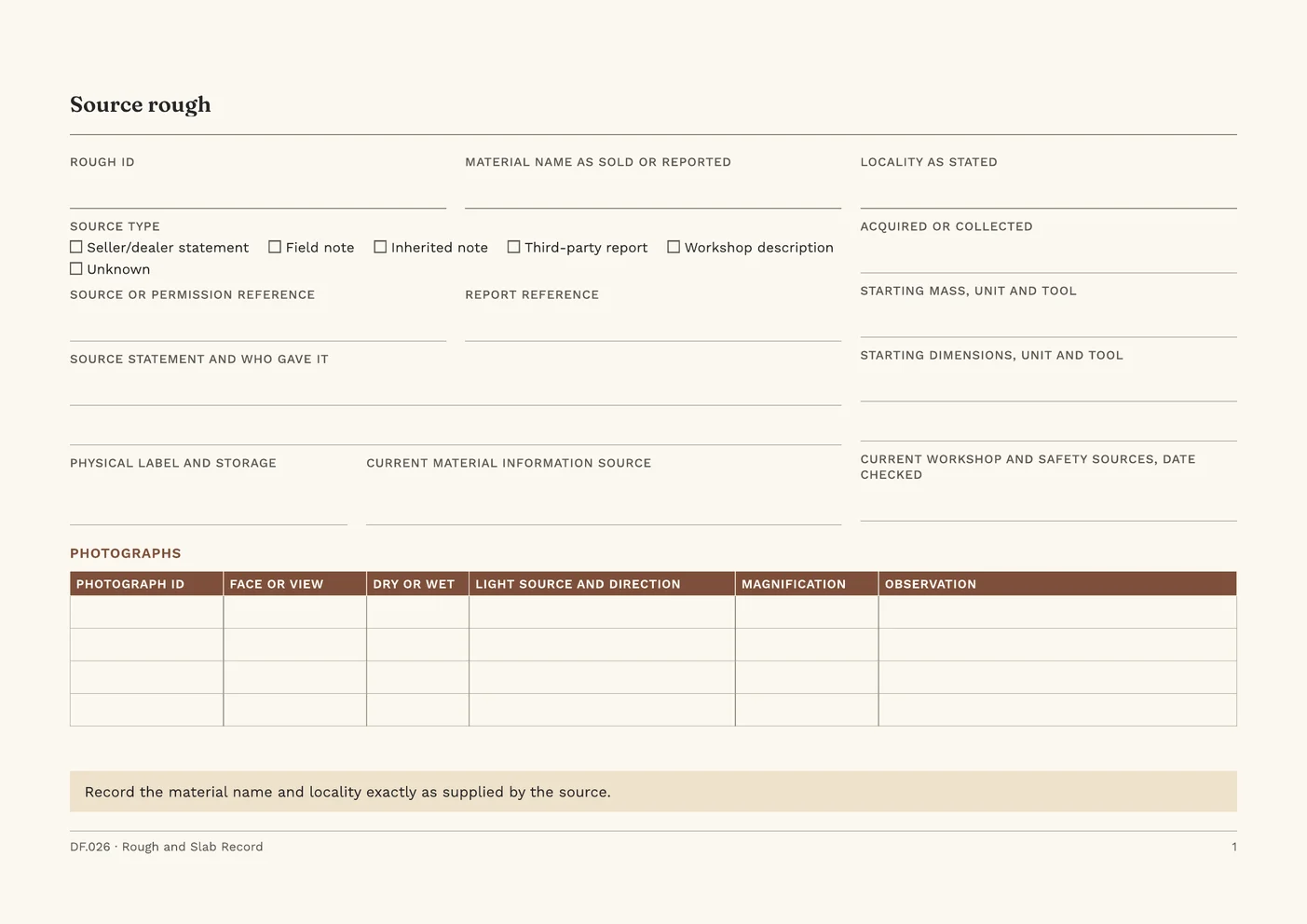
Use a notebook at the bench. In The Lapidary Process Book, use Source rough on page 1 of the Rough and Slab Record, then a Bench Session Card for the piece you are working on.
- Choose one piece of rough and give it a Source ID, such as R-001.
- Write the material name and locality exactly as supplied, and the source type: seller or dealer statement, field note, inherited note, third-party report, workshop description or Unknown.
- Weigh and measure it, noting the unit and the tool, then photograph it and note whether it was wet or dry.
- Write the Source ID on the bag or label.
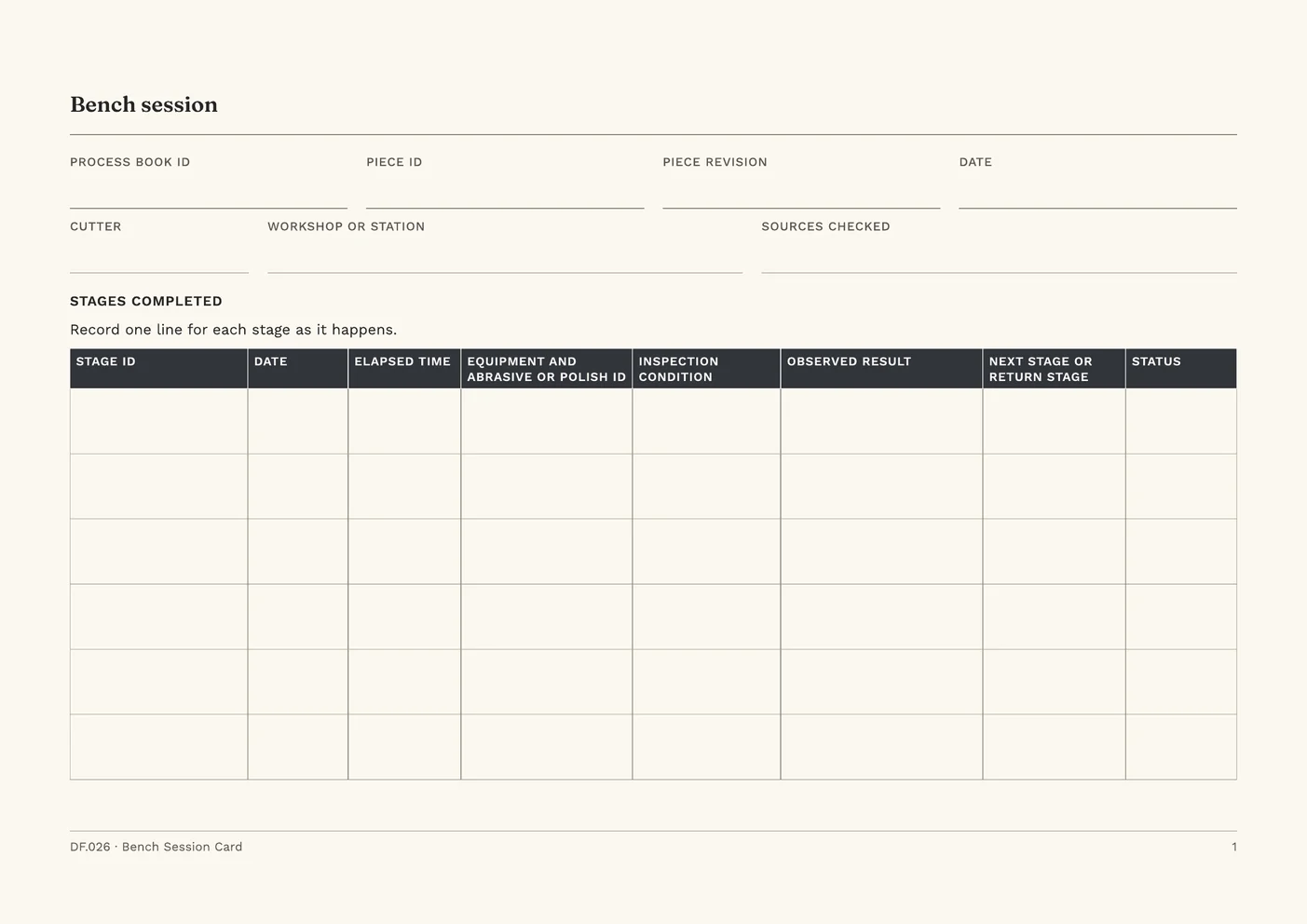
- At the bench, start a Bench Session Card for one preform: a Piece ID, the date and the workshop or station.
- Record one line for each stage as it happens: the equipment and abrasive, the inspection condition, the observed result and the next stage. When the session ends, copy each stage result to the Piece Record.
The rough is labelled, and the preform has a dated record of the stages completed during the session.
Common questions
- Won’t I remember what it is?
- Give each rough a Source ID and write the material name and locality exactly as the seller or source gave them. Keep the Source ID on the rough’s label and in each linked slab or Piece Record. Give each piece its own Piece ID.
- My grit sequence is my own. Will it fit?
- The six stages are Rough, Cut, Shape, Sand, Polish and Result. Within them, record each step you use with its equipment, the abrasive and its designation exactly as labelled, the setting, the elapsed time and what you saw.
- Are failed stones worth writing up?
- The Problems, rework and stopped pieces page records what happened, the action you took and the stage you returned to. A reworked piece gets a new revision ID, and the original plan and preform stay in its history. Separate what you observed from what you think caused it. If you record a cause, note the evidence or source supporting it.
What the full edition adds
The Lapidary Process Book
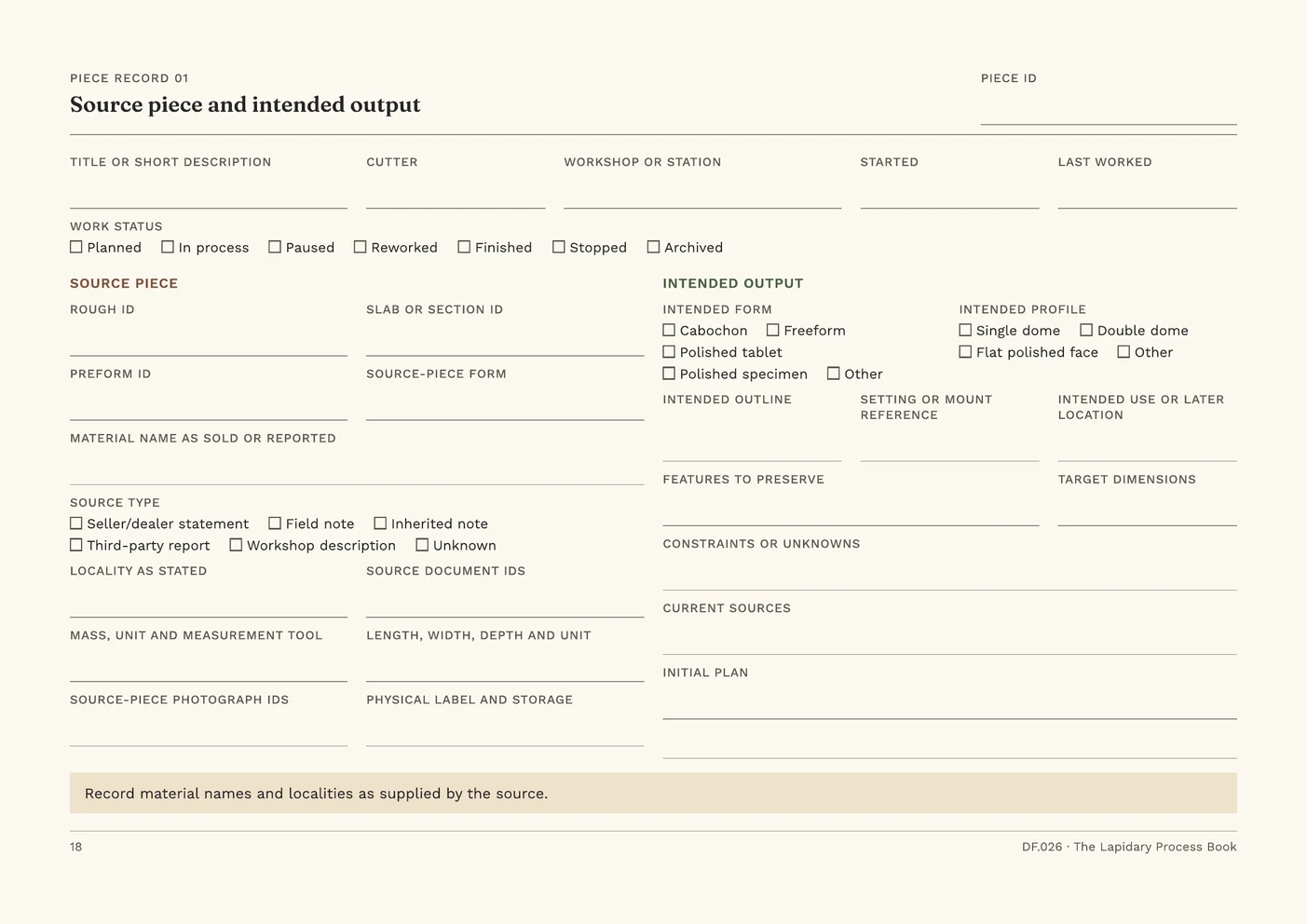
- Four Piece Records
- Each has pages for the source piece, observation and orientation, layout and cuts, shaping, sanding and pre-polish, polish and rework, the finished piece, and a summary of what to retain and change.
- Workshop registers
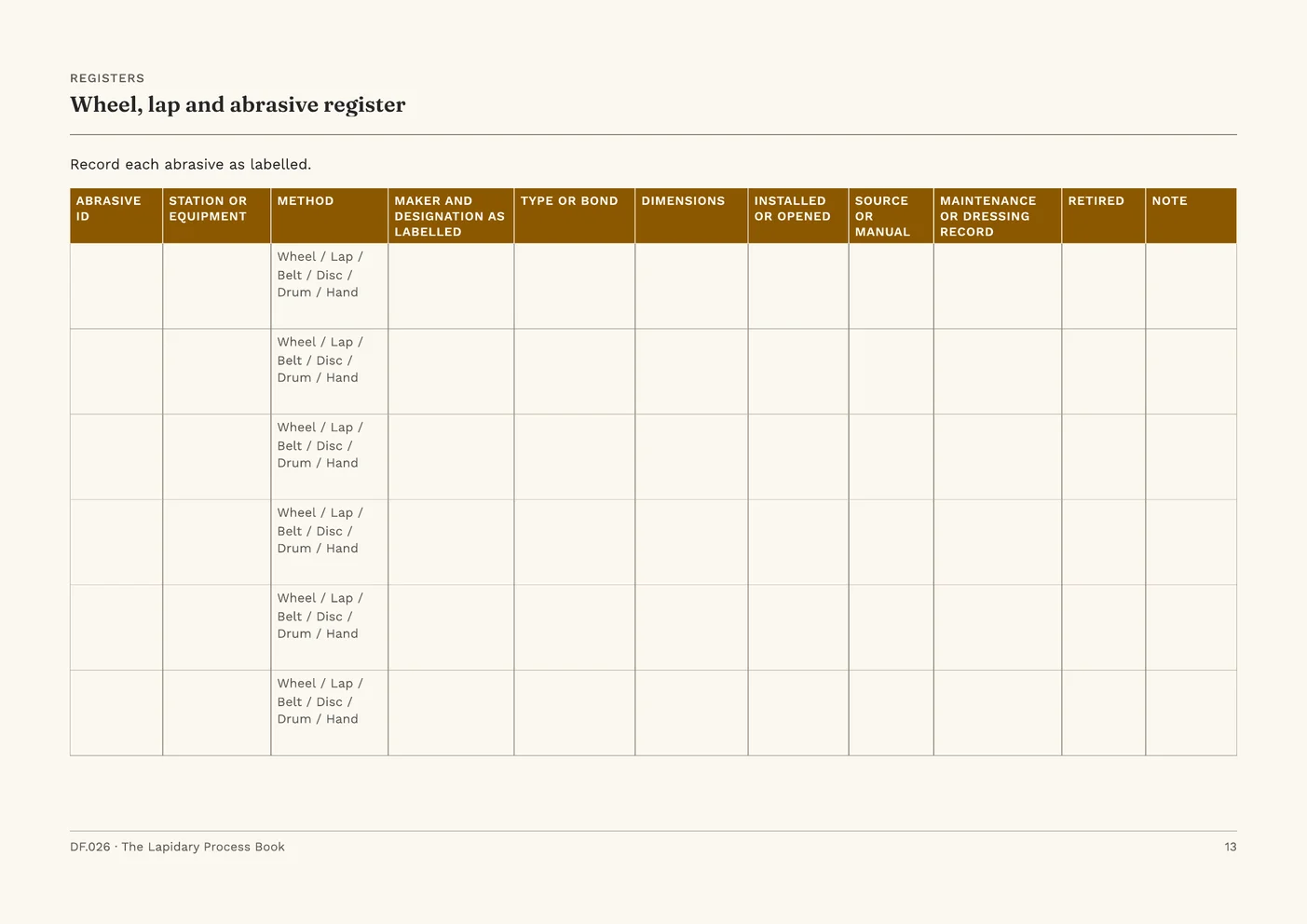
- Equipment, saws and blades, wheels, laps and abrasives, polishes and carriers, and rough and sources, each recorded as labelled.
- Material history
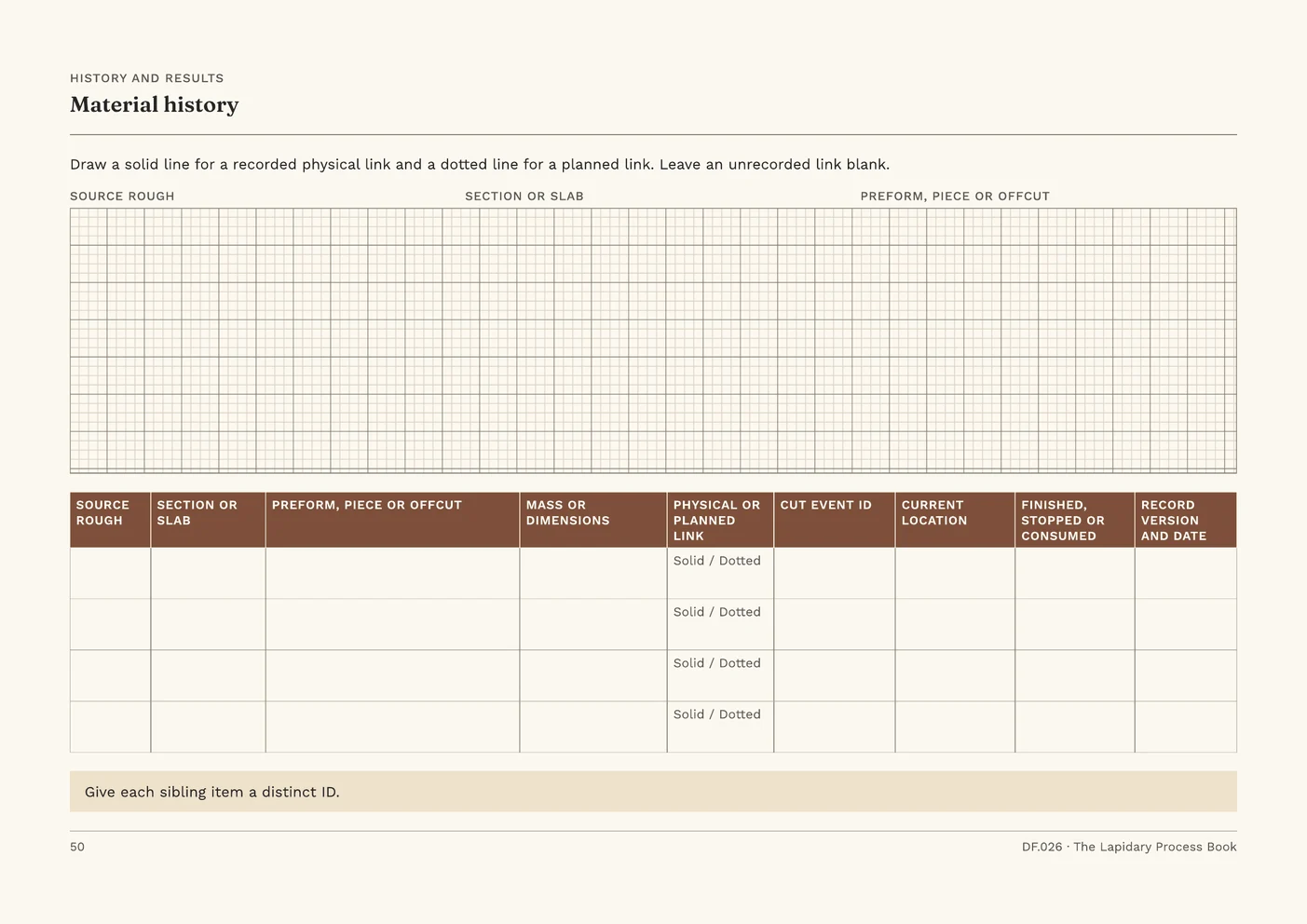
- A diagram of the recorded links between each rough and the slabs and pieces cut from it, a slab, sibling and offcut register, a process comparison and a finished-piece register.
- Where pieces go
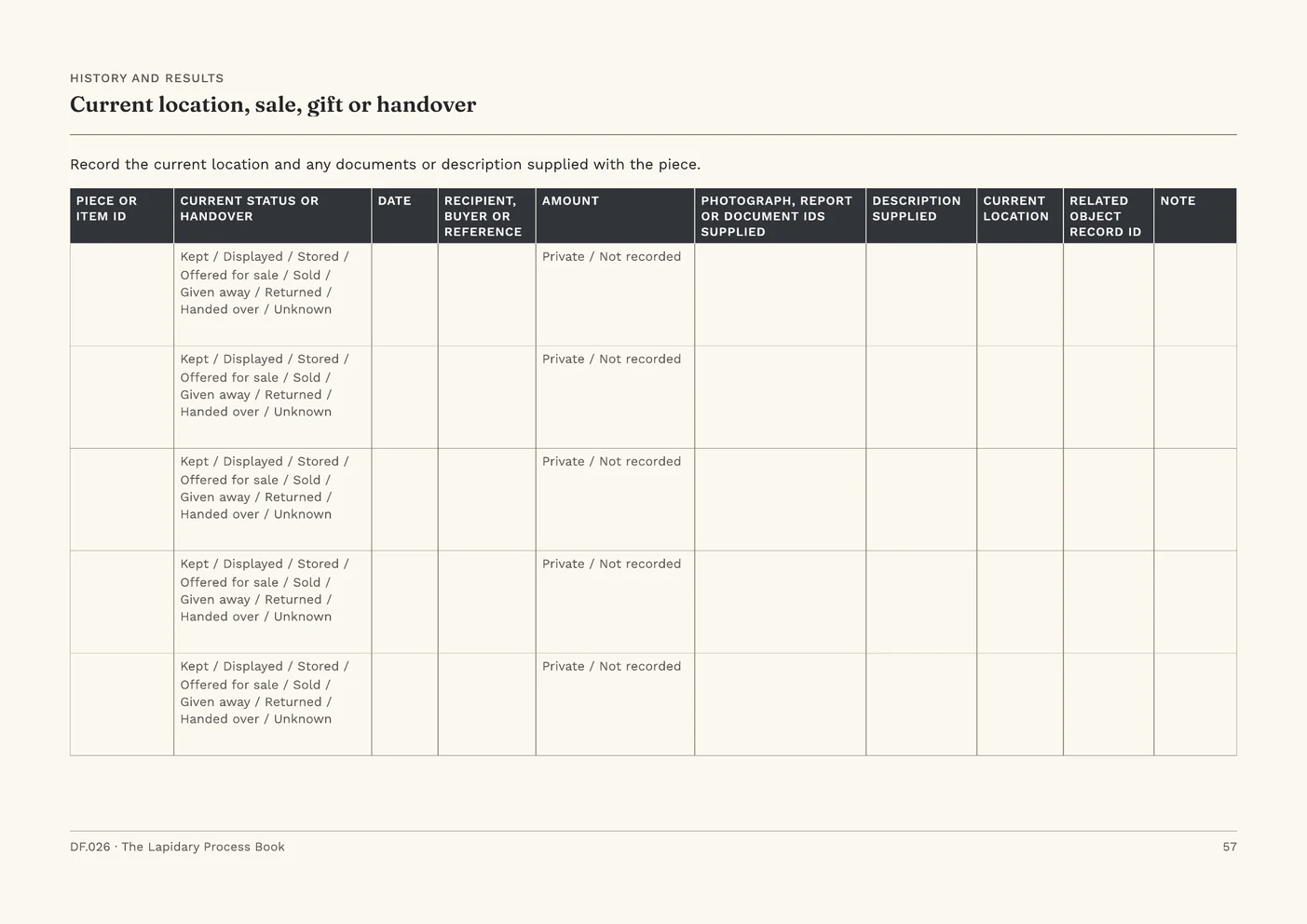
- A time, material and cost summary, and a record of each piece’s current location, sale, gift or handover.
Free utility
Cabochon outline maker
Type a width and height and the maker draws oval or circle outlines at that size, with a 50 mm square to check the print. A second page provides a stage and scratch-check card with space for your own stage names. It prints as a free PDF.